Dreaming With Limits
- Danielle Jourdan
- May 23
- 5 min read
Photo: Boštjan Podlogar / UPRS
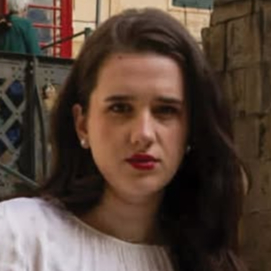
Slovenia’s first female president, President Nataša Pirc Musar, on media, leadership, and remaining human in politics.
“You have to dream, but you have to dream with limits.”
Not exactly the kind of sentence most people would expect from a sitting president. Especially not from Slovenia’s first female president.
Yet throughout the interview, President Nataša Pirc Musar kept returning to this idea of balancing ambition with realism. Hearing someone who changed history for her country talk about “dreaming with limits” almost feels contradictory at first. But perhaps that is exactly what makes her perspective so interesting.
Unlike many politicians, President Pirc Musar never originally planned on entering politics, let alone becoming president. It was simply an opportunity that presented itself later in life, one she eventually decided to take.
President Pirc Musar started out like any other university graduate, uncertain of where life would eventually take her. After graduating in law from the University of Ljubljana in 1992 and passing the national bar exam in 1997, she originally intended to continue within the legal field. Instead, journalism, which had originally started as a hobby, gradually became her profession.
Across television, radio, and later commercial broadcasting with POP TV, she built a strong media career before eventually transitioning once again into public service. In the early 2000s, she moved away from full-time journalism and into work connected to the Supreme Court of Slovenia, later serving as the country’s Information Commissioner. Throughout all of this, she also continued competing in national and European bowling competitions, something that still remains deeply important to her today.
There is nothing linear about her career. At various points, she moved between law, journalism, media, sport, and politics, careers that on paper seem disconnected but ultimately shaped the position she holds today.
“My job has to be a hobby,” she explained early in the interview, describing how passion rather than status has always guided her career decisions.
In 2015, more than a decade after leaving full-time journalism, President Pirc Musar obtained her PhD from the University of Vienna. Then, in 2022, she officially announced her candidacy for the presidency as an independent candidate, something highly unusual within modern politics.
Not only was she entering a heavily male-dominated political space as a woman, but she was also doing so without the backing of a major political party. Yet in November 2022, she won the election, becoming Slovenia’s first female president.
Even now, three and a half years into office, she admits she still sometimes struggles to fully process the reality of having reached such a position.
When asked about her personal life, specifically her love for motorcycling, scuba diving, and bowling, President Pirc Musar emphasised how important it is for people to maintain hobbies and interests outside of work, especially within high-pressure professions such as politics. For her, these are not simply hobbies, but a way of reconnecting with herself outside of public office.
She explained how bowling in particular is something she deeply misses, noting that presidential meetings and events often overlap with evening practice sessions. Still, she said she always tries to make time where she can simply be “Nataša” rather than “Madame President,” something she says keeps her grounded despite the pressures that naturally come with leadership.
Having spent over a decade working in media herself, she spoke openly about the increasing pressure for outrage, speed, and constant online attention. At one point, she described modern media as becoming what she called a “click horse,” criticising the growing prioritisation of sensationalism, outrage, and speed over professionalism and actual problem-solving.
She also stressed that journalism remains one of the most powerful forces within a democracy because, as she put it, “media can build democracy or media can destroy democracy.”
For her, the issue is not whether the media leans politically left or right, but whether it remains responsible in the way it informs the public. “We need professional media, not neutral media.” She argued that once journalism loses professionalism and public trust, tension quickly begins to grow between journalists, politicians, and ordinary citizens.
That scrutiny, however, becomes even harsher for women in politics. During the interview, she spoke candidly about how criticism directed towards female politicians often focuses less on policy and leadership and far more on appearance.
“Women are also primarily judged by the way we look.”
One story in particular stood out to me when the President spoke about an experience with a journalist who repeatedly mocked her weight during her years as Slovenia’s Information Commissioner, publicly referring to her as a “telebajska.”* Years later, after losing 27 kilograms for her health rather than out of political pressure, she encountered the same journalist again following her presidential victory.
“I could change my weight,” she told him, “but your IQ will always stay the same.”
When discussing her role as Slovenia’s first female president, President Pirc Musar moved the conversation beyond national politics and towards leadership on a global scale. She noted that only a relatively small number of individuals ultimately carry responsibility for billions of people worldwide, while women still remain heavily underrepresented within political leadership internationally.
She made sure not to present leadership as something that should just be taken over by women. For her, leadership should reflect society itself rather than simply replacing one imbalance with another.
“People are not here for us. We are here for them.”
She argued that women often approach conflict differently, prioritising dialogue and compromise over aggression, something she believes the modern world urgently needs. As she pointed out during the interview, “there are currently more than 65 armed conflicts on this planet,” the highest number since the Second World War.
Yet despite discussing war, political hostility, and media distrust, President Pirc Musar never fully slipped into cynicism. Instead, she constantly came back to the belief that most people fundamentally want peace, dignity, and stability, even if the loudest voices often make the world appear far more divided than it actually is.
“I still believe there are more good people on this planet than bad ones.”
When asked what keeps her going, what FUELs her, under the pressures of leadership, President Pirc Musar returned once again to action and responsibility.
“If you do nothing, nothing will change.”
Throughout the interview, she returned again and again to the idea of continuing despite barriers, criticism, and doubt. To dream, but understand limits. To fail, but keep moving. To remain hopeful without becoming naïve.
That, perhaps, is what defines President Pirc Musar most clearly. Not perfection, certainty, or power, but the refusal to stop trying.
*Translation Note: “Telebajska” is a Slovene insult derived from “Teletubby.” While referencing the children’s TV characters, the term is commonly used mockingly towards women’s weight and appearance and carries a far harsher tone in Slovene than the English equivalent.
Comments